Cool Farm Projects

I’ve been growing a hate-hate relationship with social media for some time. But every so often a post goes around about the world’s most picturesque farm. Rows upon rows of well-maricured production and a guy who makes all this beauty happen with only chopsticks or some other crazy thing. Or a picture of some wood-fired cedar tub inlayed into a deck on some hippie homestead paradise.

I’ve had the privilege over the last couple of weeks to visit a couple of well-established farms and gawk at the cool things they’ve built. Not exotic stuff – just basic well-built and orderly packing sheds and high tunnels. You know, sheds that have things like concrete floors, well-ordered spray lines, and plumbing. Not dirt floors and a jumble of hose all spread about at my own place.

The challenge is that here at the end of July, I barely get out of bed and get the 6 flats of plants next to our house watered, much less take on some of my dream farm improvements. So, I am much appreciative that my son, Willem has taken on some construction around the farm. He’s inspired me to get my act together later in the season.

How Farmers Cook Dinner

I’m excited that potatoes have finally come in, so this is great way to put those fresh potatoes with tender pink skins to work. For this, I put the air fryer to work to make myself lunch, so you can certainly double or quadruple this recipe depending on how many of you are there.

Ingredients:
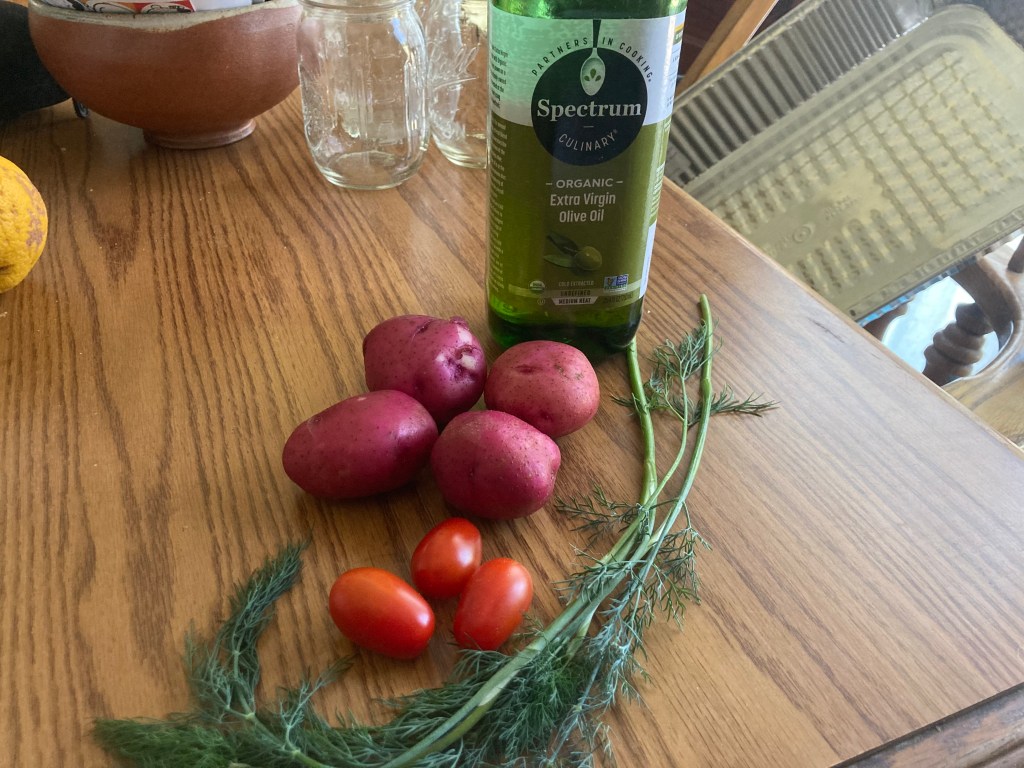
  • Red potatoes, washed and brushed and cubed. I used 4 small potatoes for just myself
  • A couple sprigs of fresh dill
  • A half dozen cherry tomatoes, halved
  • Sour cream to taste
  • Salt and pepper to taste
  • 1-2 T of olive oil

Put potatoes, oil, and salt and pepper in bowl. Cook in air fryer, first for 10 minutes, toss around, and then for another 5 minutes until brown and crispy. Top with sour cream, dill, tomatoes, and whatever you want – maybe shredded cheese, sliced garlic, green onions…you get the idea.
Mid-Season Chaos

Weed seeds popping. Beans to pick. Markets to man. One household of 3 kids (one off to college), 9 jobs between us, and, oh, BTW, who’s going to mow the lawn?

Throw in my 21st-century small business problem of electronic communication and no wonder I feel overwhelmed. At last count I manage 5 FB pages, 3 email accounts, and two websites, along with all associated management related to FB messenger, IG, texts, mailchimp, shopify, and old-fashioned phone calls.

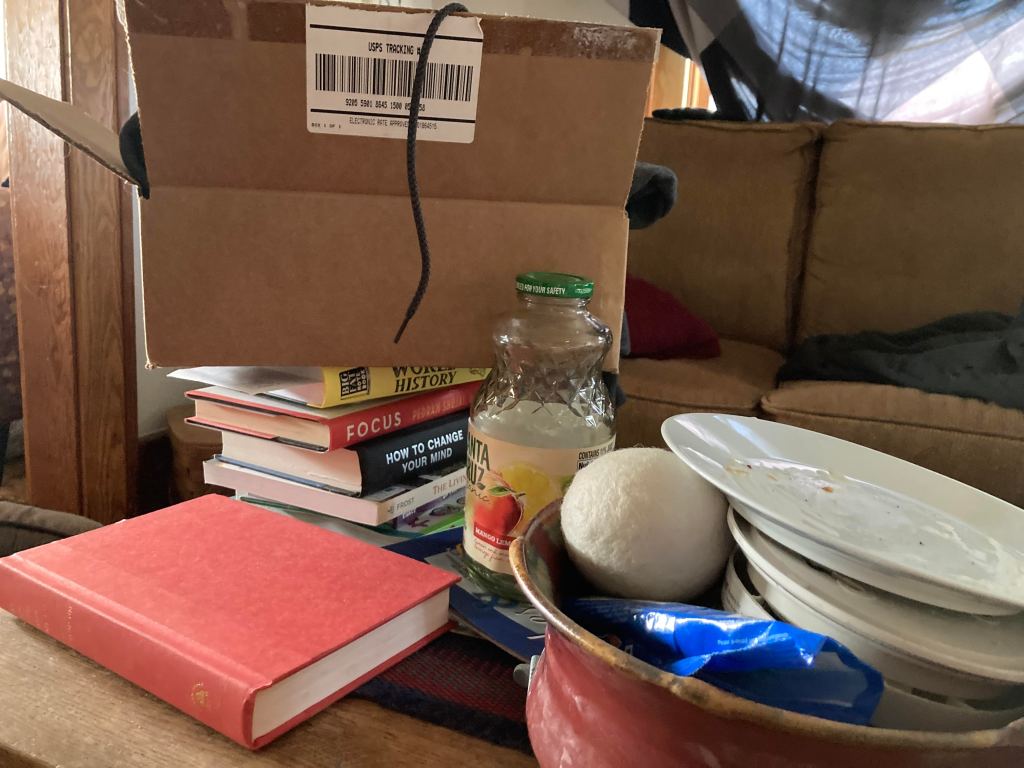
Life at Lida Farm in mid July. This is nothing new. My daughter, Sylvie, last night brought up the prospect that we’re hoarders, but my wife and I emphatically defended the household as just too darn busy to keep house as any 9-5 household does. I can see her point. Looking around the house there are at least 16 unfinished projects that have no chance of completion any time soon. Little stacks of things all over. Is that unpacked suitcase from last month? I dunno.

I only thing I know is that if we’re weeding til 9 pm, I’m not dealing with it. Instead, we triage. My way of making some order is to create these little lists with things I can do that day. As I cross them off, I pretend that the disarray is under control. The key is sanity is to keep the list modest. Ignore the other 28 items that could be put on the list and I feel ok.

But, August will come and we will let go of some things. Some fields get mowed and all those weeds become compost (and next year’s weed problems). The season itself starts to let us go as well. Potato bug pressure slows. Weed germination slows in the dry heat of late summer. The fog of the farm war starts to lift and unseen projects present themselves. Life starts to get more manageable as we ease into the cool evenings of September.

Sounds nice doesn’t it? Till then, have another cup of coffee and full steam ahead!

In the box:

  • Salad mix
  • Green Beans
  • Broccoli: Looking good with good timing – a big head variety called Imperial.
  • Cherry Tomatoes: Orange Sungold, Red Sakura, or Orange Nova grape type – luck of the draw.
  • Radishes: The bright red ones…some are bigger than the beets, so don’t confuse them.
  • Parsley
  • Little Beet Bunch
  • Green Onions

Farm Archeology

Where we now have beans, beets, and melons growing once stood a barn. The original barn build in the 1800s stood just to the West of the house. Apparently the ‘driveway’ used to follow the wetland to the south too, and, what is now our ‘back’ door was the ‘front.’ I learned this from Kenny and Elden Kratzke who grew up here and remember well shoveling the driveway by hand so the milk truck could pick up – these guys were much tougher than I!

Anyway, history does present itself when I’m out in what I call the back field. When out cultivating or hoeing, I’ve found all kinds of trinkets. Lots of pot shards like pieces of crocks or pottery, but also cool pieces of blue glass and iron buckles, old tools, and other metal curiosities that I can’t place.

For me, this little findings remind me that I’m just a temporary steward of this place. Any place on this earth that has been inhabited has had many people come and go, each making their mark whether for good or bad. I’d like to hope that I can make a positive impact on this little place and maybe one day someone else will find one of the many veggie tools I’ve misplaced.

In the box:

  • ‘Farao’ Green Cabbage
  • Salad mix
  • Green Beans
  • Pint of Cherry Tomatoes: Variety is farmers choice.
  • Sweet Onion
  • A couple cucumbers
  • A couple zucchini

The Secret

Some may think the keys to successful market gardening include skill, experience, the right equipment or maybe even the right varieties. I think these things are important, sure, but somedays I think the secret to success is simply to be caffeinated.

The physical needs of a farm really demands a lot of motivation to tackle. Think about a task like shoveling yards of compost to spread it across a field. It’s daunting. Give me a cup of coffee and I’m excited to take on the challenge.

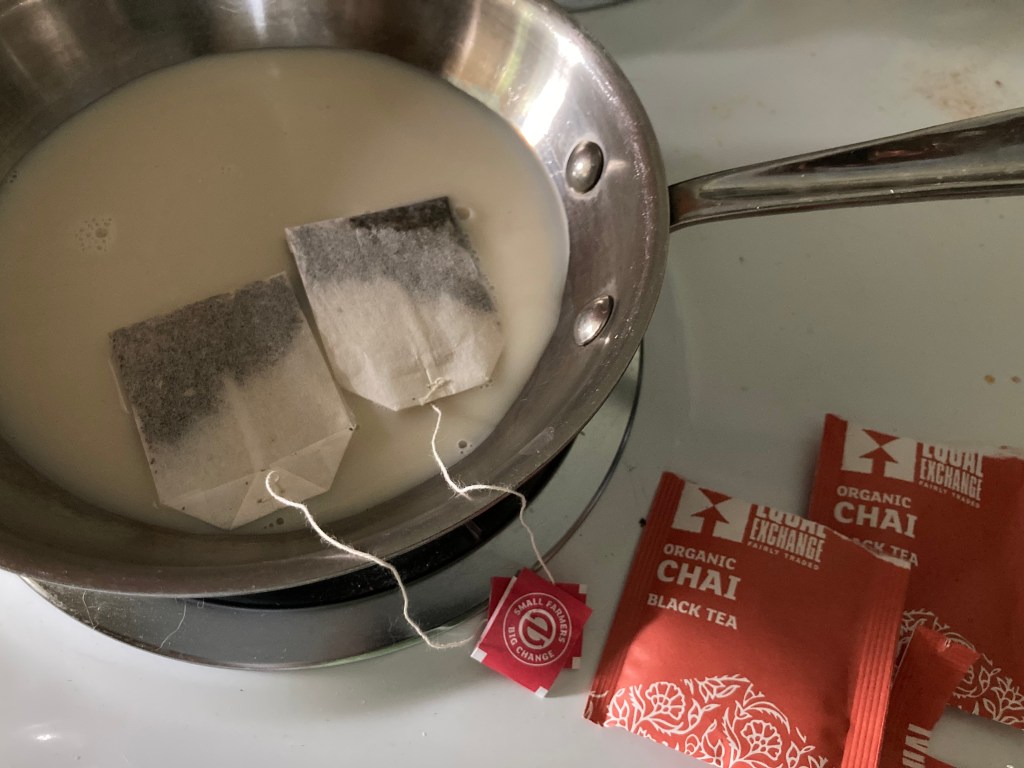
My morning ritual in order includes one cup of water, 15 minutes of yoga, and two cups of very strong coffee with cream. That’s typically gets me there. The problem today is I’m out of coffee – maybe that’s why I’m writing this – let’s see if I actually get the box together only on tea. I may just topple over and be unable to do anything…

In the box:

  • Cabbage
  • Cherry Tomatoes
  • Cucumbers
  • Zucchini
  • Spring Onions: You can used the greens just as you would from green onions.
  • Green Garlic: This is uncured garlic, freshly harvested this morning. It’s a bit stronger than garlic, but you’d use the same way. You can leave in a sunny, dry location for 3-5 days and the wrapper will dry down and you officially ‘cured’ garlic
  • Swiss Chard
  • Kohlrabi: Peel, slice and eat with salt and lemon.
  • Parsley

Farmers Cook at Home: Quinoa Salad

What came to my mind when I looked at this week’s box contents was a couscous or tabouli using the tomatoes, parsley, and cucumber. But I didn’t have either couscous or bulgur on hand, so I put the quinoa to work we had in the cupboard, treating it the same way as I would couscous by browning a bit in the oil before adding liquid.

Ingredients:

  • 1 cup quinoa: Cooked with broth at 1 quinoa to 1 and 3/4 cup broth or stock.
  • A couple spring onions, diced plus greens chopped
  • Olive oil: 1 T for frying, 3 T for seasoning
  • Cucumber, peeled and diced
  • A couple sprigs of parsley, chopped
  • A handful of cherry tomatoes, halved
  • Juice from half a lemon

Over medium heat in a saucepan, add 1 T olive oil and diced spring onions. Once a bit brown add quinoa and brown for 2-3 minutes, stirring occasionally. Add 1.75 cups of broth (I used 2T of Better than Bouillon Chicken stock), once boiling, cover and simmer on low for approximately 15 minutes. Chop all other ingredients while quinoa is simmering. Once done, let sit 5 min or so to absorb all liquid like you would rice. Fluff with a fork and add all other ingredients, adding as much olive oil as you’d like – me I was thinking of it as a tabouli, so I’m generous with olive oil. Throw in some feta or olives if you like those and have on hand.

Oh Beautiful Mulch!

Pretty sad title here. I don’t know if I’ve ever heard the likes of Whitman or Longfellow meditate on the wonder of mulch before. Probably works for a Master Gardener who wants to pep up their garden day presentation, however.

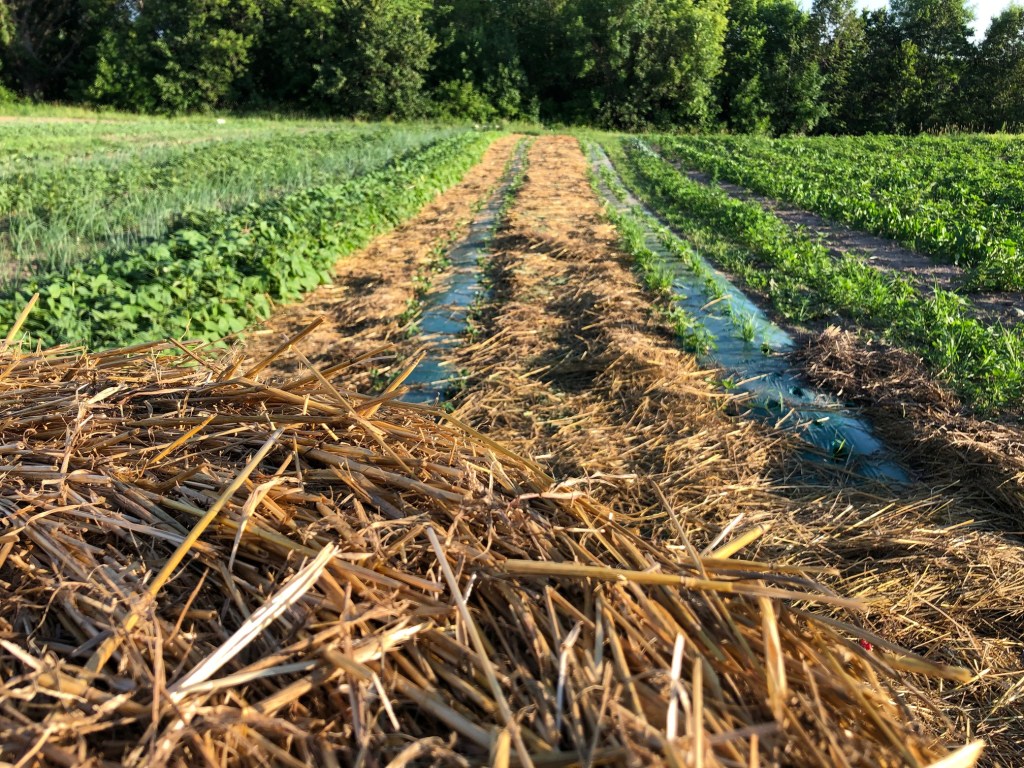
Still, I’m sticking with it. As Molly and I were laying down straw from my neighbor, Nick Larson, yesterday, I was struck by the beauty of a nice straw mulch. I sometimes pictures myself in foreign counties on vacation touring some manicured farms. Think something like a greens operation in Okinawa or a centuries-old artisan tomato farm tucked into the hills of Tuscany. These places are not something wild like the overgrown hippie commune out West or Lida Farm typically in August. They are the opposite. Their sights provide a calm, a relaxation that comes not only from their order but also their beautiful abundance, clearly sitting heavy in the fields awaiting the farmer’s harvest.

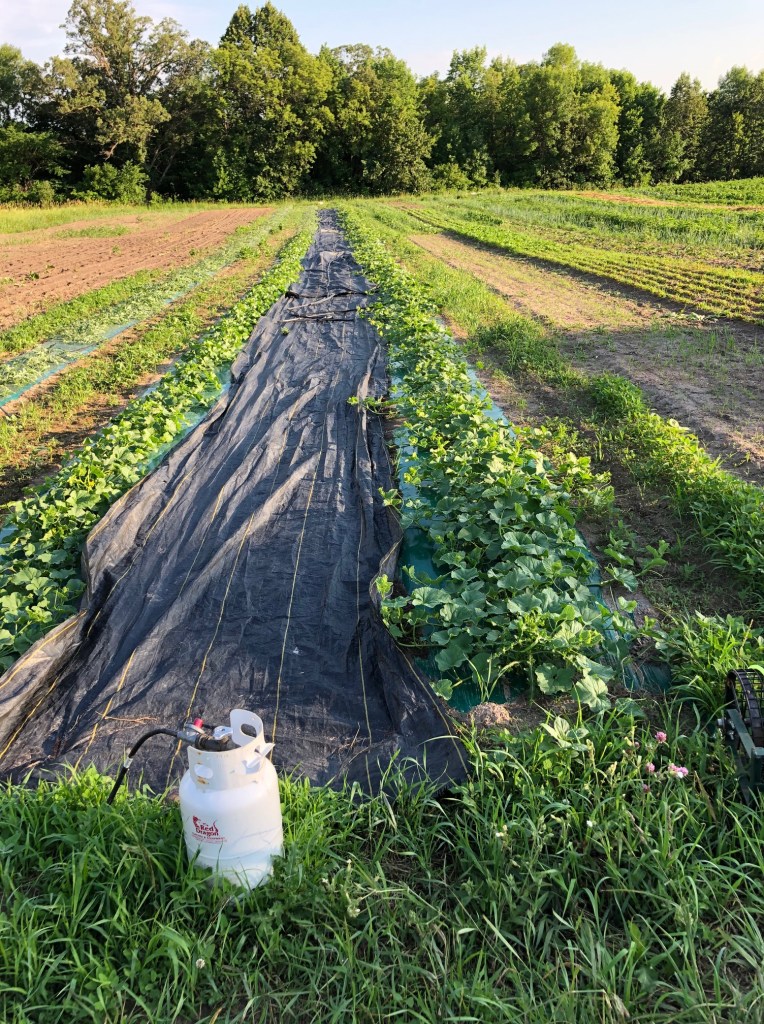
Well, that fantasy is maybe a bit lofty, but, all the same, I caught a glimpse. You see, modern vegetable operations are all about plasticulture, that is, using plastics in some form for production. One of the most common inputs is a black plastic, or, as some call it, landscape fabric. I like it. It lasts forever and does a great job of keeping down weeds in between beds and can be used in-line like we’re doing in the old high tunnel. We cut holes in the fabric and planted cucumbers. The only places to weeds are the holes themselves.

But, as you can tell from my 18 years of blogging, I’m a romantic. Despite landscape fabric’s utility, the straw mulch wins out. Not only is the contrast of straw next to vegetables beautiful, but as straw breaks down over the summer season (rain permitting), this natural input provides organic matter in my clay soil which drastically needs it.

In the box:

  • Dino Kale: This is a cooking kale – best to simmer…curly kale can work for both a cooking green and a salad green.
  • Garlic Scapes
  • Radishes
  • Red or Green Lettuce
  • Snap Peas: Yes, edible pod – don’t shell.
  • Parsley
  • Cucumbers
  • Zucchini

How Farmers Cook Dinner: Greens and Beans with Garlic Scapes

Ingredients:

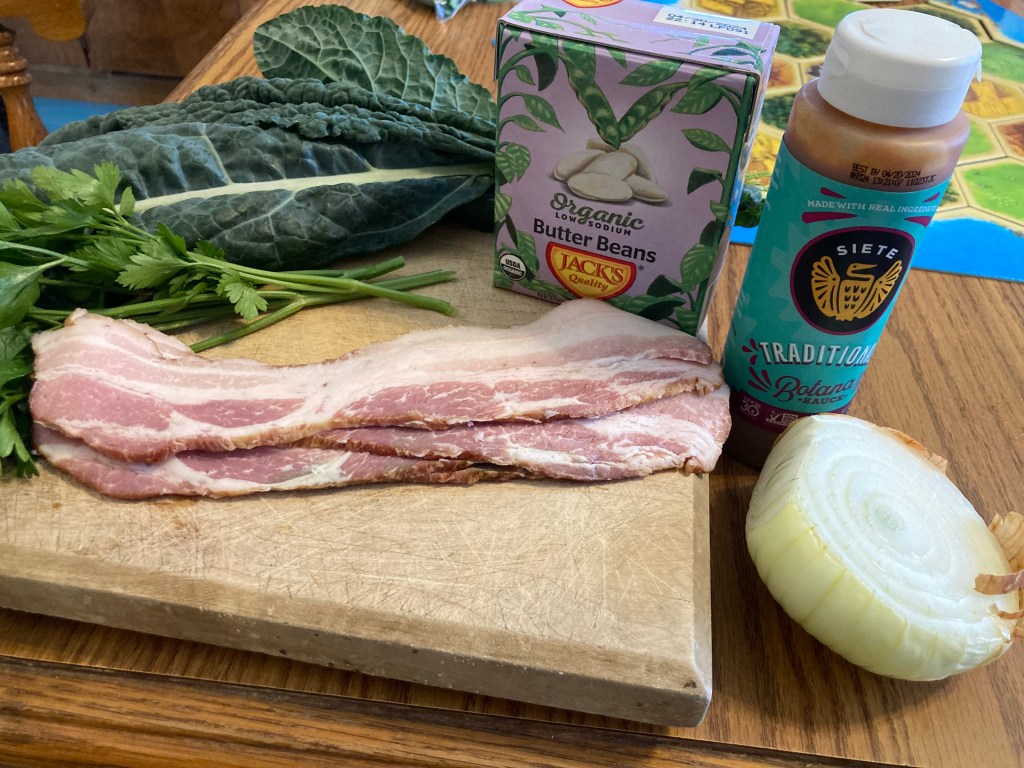
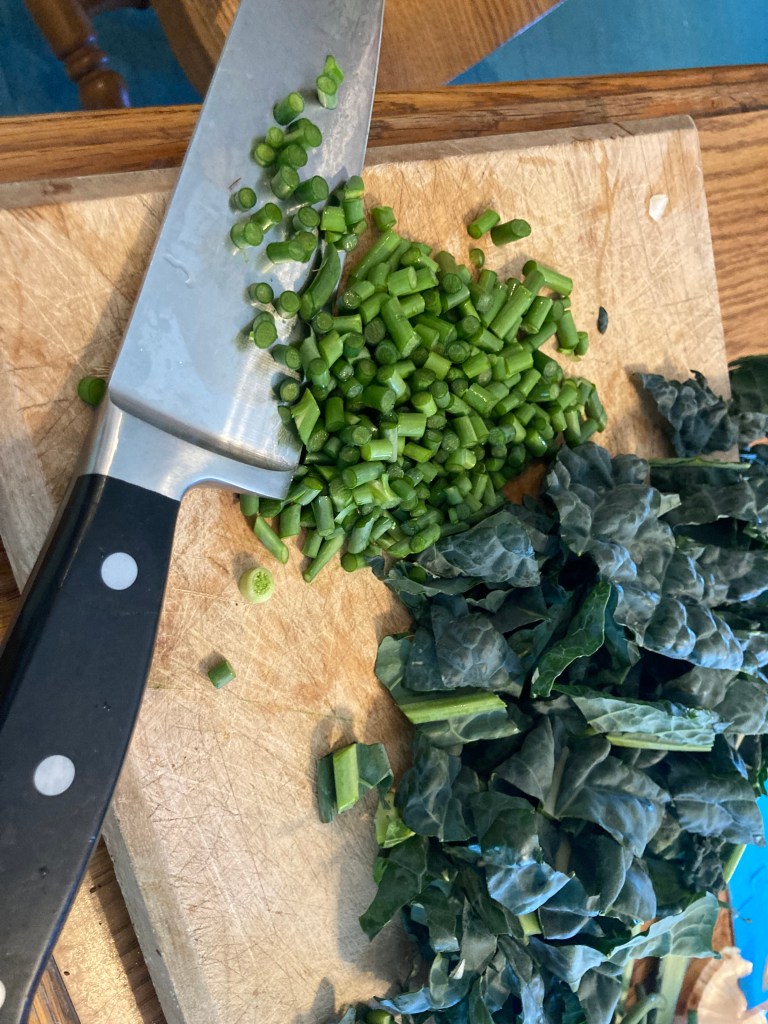
  • A few dino kale leaves, roughly chopped after taking out middle ‘rib’
  • A couple sprigs of parsley
  • 4-6 slices of bacon
  • Half an onion
  • A bunch of garlic scapes
  • Beans in can/package of your choice
  • 1 cup Chicken Stock

Directions: Over medium heat, sautee onion, garlic scapes, and bacon in a medium saucepan. Once bacon browns and onions are translucent, add chicken stock and scrape brown from bacon off bottom of pan. Add kale, parsley, and beans. Cook, covered over low heat. After low simmer for 15-20 minutes, serve with toast or put over quinoa, rice, or couscous and garnish with sauce of your choice –