CSA Sign-up Season

Another February has rolled around and we are readying the farm for another season.

NOW is the time to sign up for the summer CSA season. We are doing something new and exciting this year by offering ‘farmstand bucks’ with a membership for use at our on-site farm stand or to arrange for bulk purchases (available for pick-up on farm). Our idea is to give member more flexibility with their membership.

  FULL SHARE: $525 (16 boxes plus $30 in farm stand coupons)

  EVERY-OTHER-WEEK SHARE: $275 (8 boxes plus $20 in coupons)
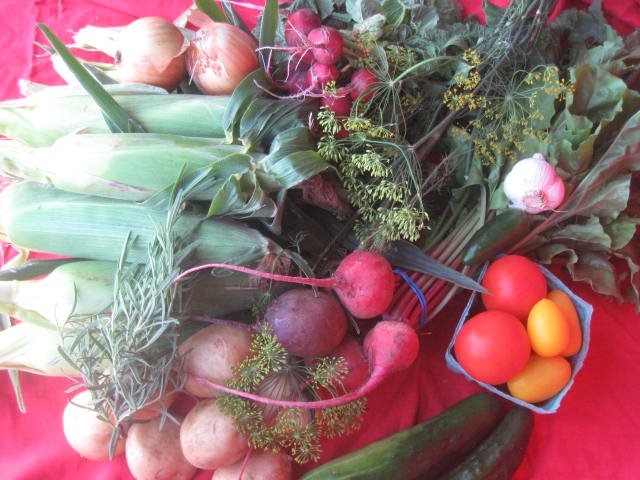
Picture of CSA box in August
August CSA box

In each 3/4 bushel box you will receive a mix of what is in season (between 8-12 different crops each week). The early season boxes will be quite a bit different than late season boxes. We are a certified organic operation, so all our crops are grown without any synthetic pesticide, herbicide, or fertilizer. We concentrate on the staples like lettuce, tomatoes, and sweet corn, but we also mix it up with some interesting crops too.

DROP SITE LOCATIONS

  1. Detroit Lakes – MANNA Food Co-op (Mondays)
  2. Pelican Rapids – Riverview Place (Tuesdays)
  3. Perham-location TBD (Mondays)
  4. Fergus Falls-Keller Williams Realty (Tuesdays)
  5. Lida Farm (Mondays)

HOW TO SIGN UP

Please fill our our 2018 order form below to join for the year.  We ask for half the payment when you sign up with the remainder due half way through the summer.

2018 CSA Order Form (click to download)

We do fill up each year, so please contact either Maree or Ryan to confirm availablity if you’re reading this after April 1 or reach out with any other question you may have. Find us at lidafarmer@gmail.com or 218-342-2619.  We’ll make a note on this website and on Facebook when we do fill up.
2018 CSA Brochure (click to download)

Finding Rest in a Time of Exhaustion

The most common question I field this time of year is “Well, Ryan, do you have the farm put to bed?” I like the idea of tucking the farm and all the tractors into some warm flannel sheets for the winter. Ridiculous, I know, but the language of ‘bed’ makes sense this time of year. Like the land, we as humans need a cycle of rest after a season of exhaustion – even if you don’t farm yourself, you may feel this pull. After millenia of your ancestors slaving like crazy in summer to make enough food or money to survive a winter, the instinct is baked into your being, into your genes.

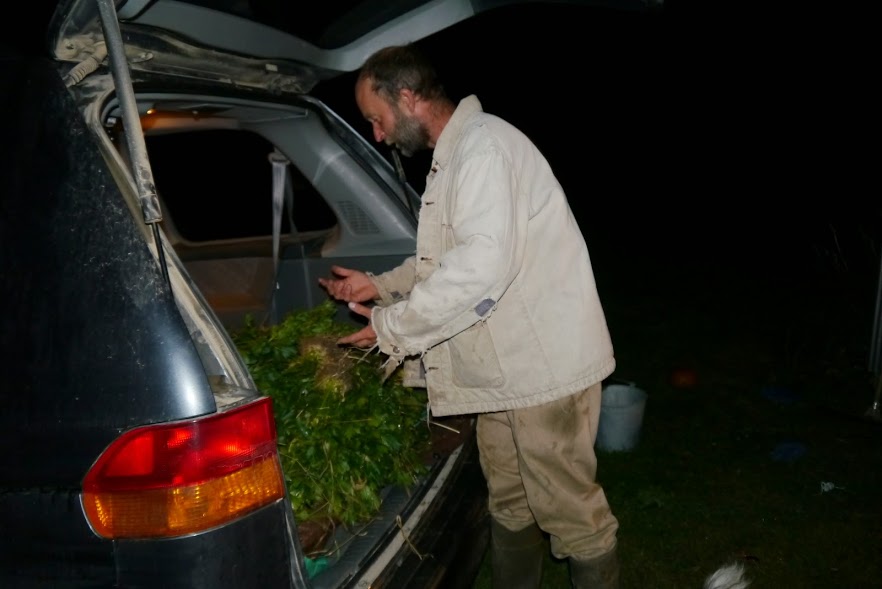
Last Year Washing Produce at Midnight

In many respects, today’s world makes rest even more critical. Instead of listening to our bodies and tuning into the seasons, we charge forward with a long to-do list in one hand and a grande Starbucks in the other, all the while glued to a devise which tells us constantly that we need to buy more stuff. In this environment, we’re not only missing the subtle seasonal cues to slow down, we’re running roughshod over human biology daily.

Taking on the role of your odd uncle who gives unsolicited advice to anybody who will listen, I think we all need to find an activity to unplug us from our 21st century problems, plug us into the rhythms of our physical world, and find some limits (Does that sound new agey?). Normall by this time of year I’m typically spent, completely burnt out. Last fall I had a hard time walking down the driveway to get mail – it was just too much of a task. This year I could go another two months with CSA harvests and deliveries. With the risk of sounding too hippy, I chalk it up to a year’s worth of daily morning yoga. That’s the activity that takes me out of my head and paying attention to myself. After abusing my body for 14 years at Lida Farm, only now do I think that I’ve found some limits, and, even though I could keep this farm season rolling, I’m ready to embrace fall and hang it up for a while – maybe even take a sauna.

In the box:

  • Acorn Sqush 
  • Pie Pumpkin: Perfect with this gnocci recipe attached with the sage
  • Butternut Squash
  • Harelred Apples: Nice for sauce or baking
  • Yellow Onions
  • Fresh Sage 
  • Daikon Radish
  • Salad Mix 
  • A couple small Rutabagas
  • Bunch of Beets
  • Garlic
Awesome recipe Mar and I made this week – Gnocchi with Sage Butter: http://www.rachaelray.com/2013/12/27/pumpkin-gnocchi-with-sage-brown-butter/

Organic Inspection

We see the words “certified organic,” and, for some, it’s a total mystery. What does it mean to be certified? Who certifies that it’s organic? Lida Farm’s been certified organic for the last four years, so let me shed a little light.

Last week we had our organic inspection, which is a significant part to the certification process. In the spring I submit all planned inputs to our certification agency from any fertilizers to the brand of bleach we use to clean the sinks (it’s from Fleet Farm, for the record). All inputs have to meet standards set in the 90’s by USDA, so materials need to be non-synthetic. Also seeds need to be certified organic themselves, if available. Our certification agency, OCIA, reviews all these plans and the ingredients to all these inputs lets us know if they meet the USDA standards. Then, when the organic inspector comes, he wants to see evidence that these were the inputs we used and he’s on the lookout for any chemical use on farm.

Our inspector this year was a guy named Eli. After a quick walk around the farm to look at the fields, our packing shed where we store crops, and the buffers between us and conventional fields, we spend a few hours sitting at my kitchen table, looking over seed packets, field history records, and the documents I submitted in the spring. Eli has me do an audit of five different crops to see if I can explain the whole chain from seed to sale to a customer – we do five because last year we 228 different varieties. I show in my records when I planted the variety, where on the farm it was planted, which inputs were used on that field, and where and when I sold that crop variety. Four acres seems small until you start tracking every bed in this way….  Anyway, I think we passed.

In the very full box:

  • Cherry tomatoes
  • A purple top turnip
  • Buttercup winter squash: green
  • Spaghetti winter squash: yellow
  • Red Kuri winter squash: the red one
  • Yellow onions
  • Garlic 
  • Brussel sprouts
  • Red cabbage 
  • Fresh thyme
  • Fresh rosemary
  • Westlander kale
  • Italia pepper
  • Bunch of beets
  • Cucumber
  • Record Heat on First Day of Fall

    Last year NOAA declared 2016 the hottest year on record – the third consecutive annual heat record. That means 2014 was the hottest year on record before 2015, only to have the record broken again just the next year. The jury is still out on 2017. 

    As somebody who does vegetable production for part of my living, I pay close attention to weather and the overall change in weather trends, i.e., climate. I have observed a couple major trends since I started on this path over 15 years ago. One, the shoulder seasons have shifted. Summer’s keep extending into fall and springs have typically had large stretches heat. Two, storm events are certainly more intense. I don’t I need to explain this to anybody who lives in the area and you’ve certainly heard me point this out before. 
    I bring up climate today simply because the future of agriculture has been on my mind. I’ve been wondering if my children viably take on this place 30 years from now. Considering that modern agriculture developed over two millennia in a very stable climate, such a drastic change over the next few decades could prove untenable. Sure technology can give us tools to adapt, however, such deep rooted influences on crops such as insect and disease migrations will most certainly prove a challenge. All told, these climate shifts make me nervous at best. 
    In the box: 
    • Green Cabbage: Most received a half cabbage simply because they were too big to fit into the box. 
    • Buttercup Squash: Seems like most people’s favorite type. Please store all winter squash in a dry, sunny location…that’s where it does best. 
    • 2-3 Delicata Squash: The yellow ones with a green strip. 
    • Russet Potatoes
    • Canteloupe
    • A Couple Onions
    • A Mix of Colored Peppers
    • A Few Tomatoes
    • Carrots 
    • Thyme: Small bunch with red band.
    • Cucumber 
    • A Couple Small Corn: This came out of this last sad patch of corn. I figured we’re far enough away from the main corn season that you’d appreciate even a couple stray ears. 

    Farming isn’t Wholesaling

    The world we live in today has what I call hyper-surplus. Lots of shopping happens in large big box stores with products piled 30-feet high or online where the likes of Amazon has virtually unlimited supply of anything. It’s been well discussed that, in this environment, we’ve all been trained to get whatever we want whenever we want it – myself included.

    Over the years I’ve found that these expectations have bled into my own little business as well. I’ve gotten more incredulous reactions from people at the farmers market or on the phone when I tell people, “Sorry, I can’t supply 50 lbs of beets…or, 5 bushels of tomatoes…or, 30 lbs of salad mix with a day’s notice.” It isn’t that I’m keeping the good stuff all stored away in a warehouse and just choosing not to sell; that would be foolish. Indeed, if I had a warehouse of produce, you’re darn right I’d sell any product at any quantity possible. But, this is where farming and wholesaling diverge – farming in general and Lida Farm in particular have very real limits. One, farming takes time. Two, land has limits of production, no matter how much agro-chemical companies try to tell us otherwise.

    Time: If a store run out of a product, it’s simply time to re-order. If we run out of a vegetable, it’s impossible to manufacture on the spot. I made the decision about how many celery plants to grow 80 days before harvest and there’s no going back in time to fix it. The other time constraint is simply what it takes to harvest and prepare a vegetable. Today’s salad mix, for example, took about two hours to harvest, wash, and bag – and this is just one of 12 crops in the box. Combine with juggling a farmers market and three farm stands, and it’s a wonder we’ve been getting these boxes out mostly on time at all.

    Land: We grow produce on the four acres of tillage land which would actually work for vegetables on our 20-acre farm. We can certainly always do a better job of weeding and managing crops, but, let me assure you that no matter how well managed, an acre of produce can only produce so much stuff. Even with a very successful potato crop this year, we have at best 1,200 lbs left. Once they are gone, they are over until 2018. Even if we did a perfect job weeding, cultivating, and managing the crop, we might have 200 lbs more.

    Although these limits keep us from a few more sales, that’s fine. I remind myself that we can only grow as fast as soil builds, which is quite a bit slower than our modern world generates pixels or robots manufacture goods. I also remind myself that I’m a human organism, which also has limits of time and energy, even a season not unlike plants. We should all remember that in this 24/7 world, our limits are not something to bemoan, but accept and celebrate because they make us humans, not machines.

    In the box:

    • Snap Peas: Edible pod…yes, these made their fall comeback
    • Beans: Most received green, but some got yellow
    • Canteloupe
    • Delicata Squash: Yellow-striped sqaush. Good baked in oven dry.
    • Acorn Squash: Great for stuffing. Try doing a stuff with breadcrumbs, the sage in the box, and bulk pork sausage.
    • Russet Potatoes 
    • Cherry Tomato Mix
    • Fresh Sage
    • Red Onion
    • Yellow Storage Onion
    • Eggplant: Some received long Asian style, others traditional Italian style
    • Salad Mix
    • Poblano Peppers: Yes, these have some heat, but not much.