Growing on Plastic
![]() |
| Example of Melons on Plastic Mulch |
A very popular way of growing vegetables commercially today is in a plastic mulch. Sometimes called IRT for InfraRed Transmitting, it is a thin plastic which allows light through and it wide enough to to spread over a standard 6-foot bed. Maybe you’ve seen this.
Seasonal Transition Stress
![]() |
| Mar and I relaxed last fall after the craziness of summer |
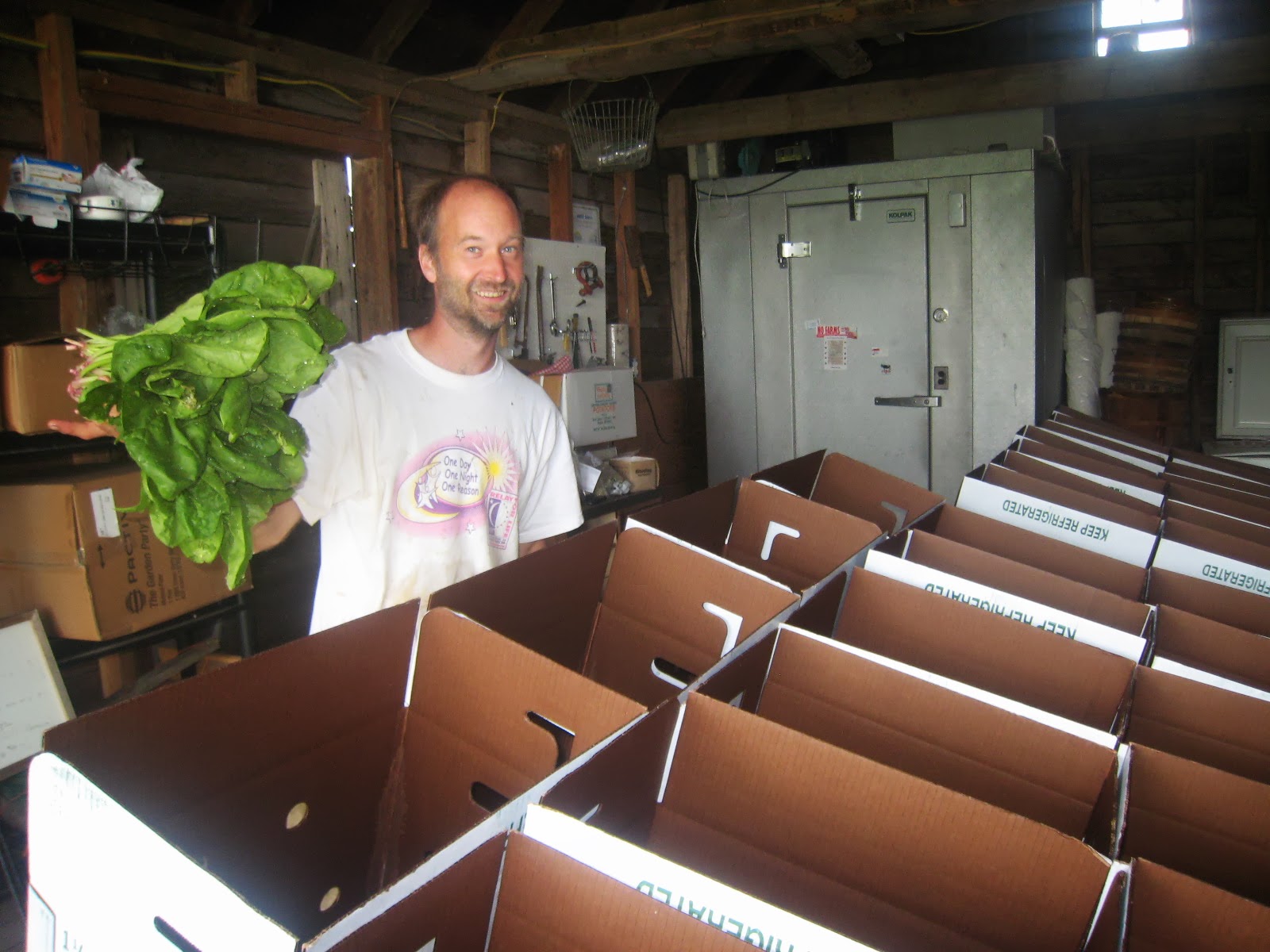
This time of year on the farm really gets to be a blur where Maree and I head towards total exhaustion. Harvesting produce has started, so we are harvesting Tuesday night, Wednesday morning, Thursday night, all day Friday, plus Saturday morning. Between the harvesting times we both spend about 3 hours delivering boxes on Fridays and invest about 5 hours every Saturday in the Lakes Area Farmers Market in
Detroit Lakes. As you can see simply harvesting and driving around produce takes a fair amount of time, but, over and above all this, we have this time-crunch where we still need to weed, trellis tomatoes, feed and tend animals, and also plant for the fall. How do we keep track of all this, especially since I have a full-time job on top of all this? I have no idea. Thinking about it, I’m kind of surprised we make it though each year, although I don’t reflect when doing the work.
Speaking of planting…it’s hard to believe, but we did start planting seeds for fall this week. I planted all our our fall brassicas like cabbage, broccoli, and cauliflower. At lot of times people only think of these crops as products of spring, but, in actuality, brassicas and other cool-season crops like spinach and lettuce do much better in the fall where the days get shorter and we have consistently cool temps. Since it’s the summer, one trick we employ is laying burlap and row covers over the planted ground to get plants started in this hot and dry conditions. I just checked under the burlap this morning, and those fall brassicas are popping up out of the ground like crazy. It’s a long way to October it seems, but the plants are off to a great start.
In the box:
A bit more Broccoli
Green Cabbage
Kale: A majority received Lacinato (Dino) Kale which is dark green and bumpy in texture. Others received Red Russian Kale which is kind of frilly but red-green in color with purple stems. You use either type the same way (See recipe below).
Green Garlic: This is fresh garlic before it has been dried down or cured. You can use the garlic fresh or simply leave in a dry location like your kitchen counter to dry and use later. Green garlic is a bit stronger in flavor than cured garlic and you’ll have to peel a bit more to find the clove.
Snap Peas: Snap peas are an edible-pod variety, so please don’t shell them…it would be quite a waste. Just eat them.
A couple Zucchini
A Sprig of Basil
Kohlrabi
Romaine Lettuce: I know people are probably tired of lettuce…I promise to lay off as we move into summer crops.
I know kale chips seem to be all the rage lately, but Maree and I just got into them last fall and they really area great!
by Barbara Scott-Goodman & Liz Trovato
3. Bake until crisp, tossing once or twice, for 30 to 35 minutes. Serve at once.
Getting Fields Under Control
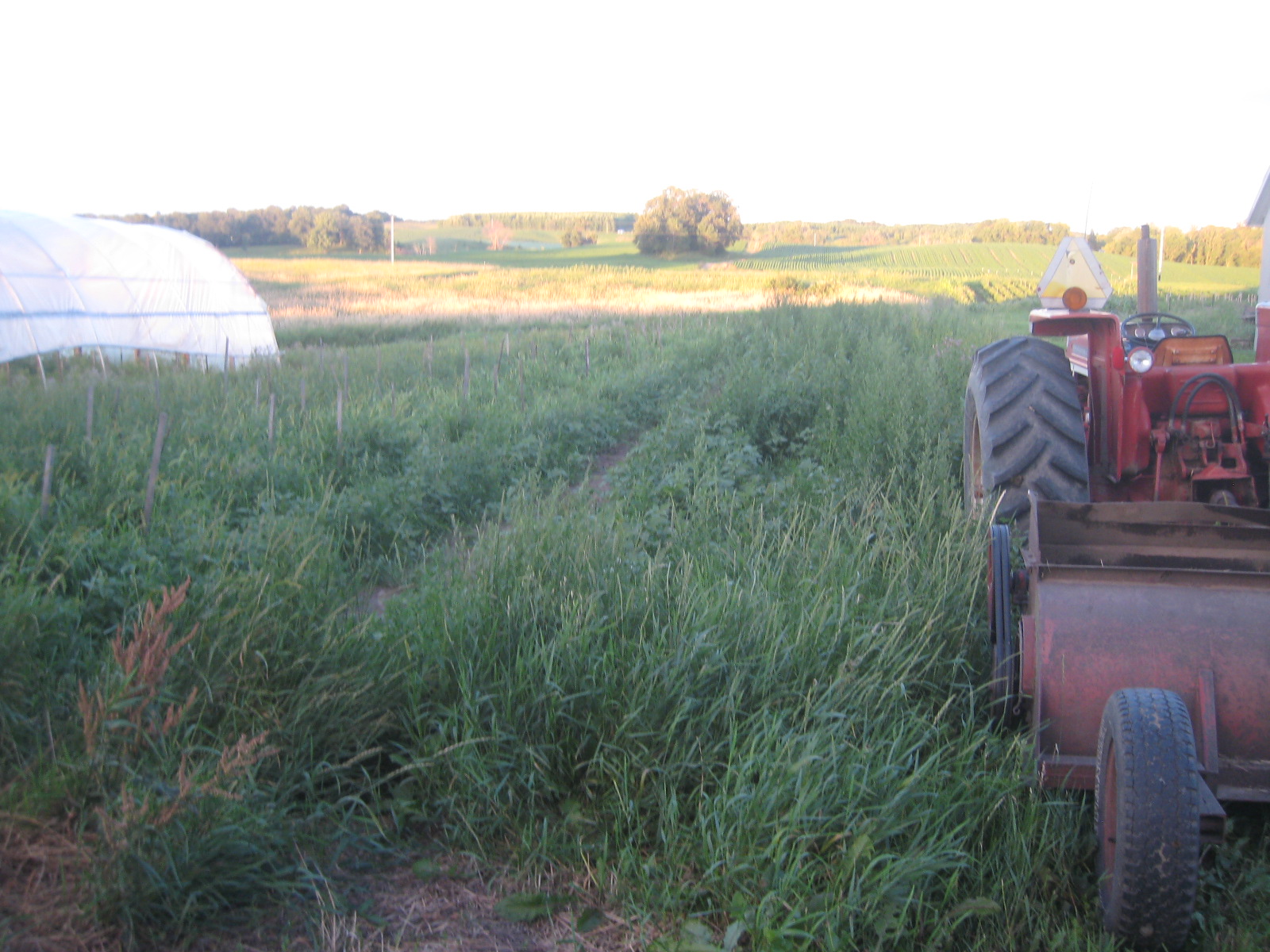
Keeping weeds under control is priority number one at Lida Farm this time of year. Now that the heat has finally come, all those weed seeds sitting in the wet ground have germinated, and, voila, a weed explosion hit the farm. Foxtail, lambsquarters, red root pigweed, wild buckwheat are popping up all over, so we’ve been throwing everything we have to keep the little barbarians from taking over. First we cultivate by tractor, then wheel hoe, then hand hoe, then, finally, weed by hand. If you’ve ever feel like you can’t keep your garden free of weeds, imagine trying to do that over two and half acres where an acre is about 3/4 the size of a football field.
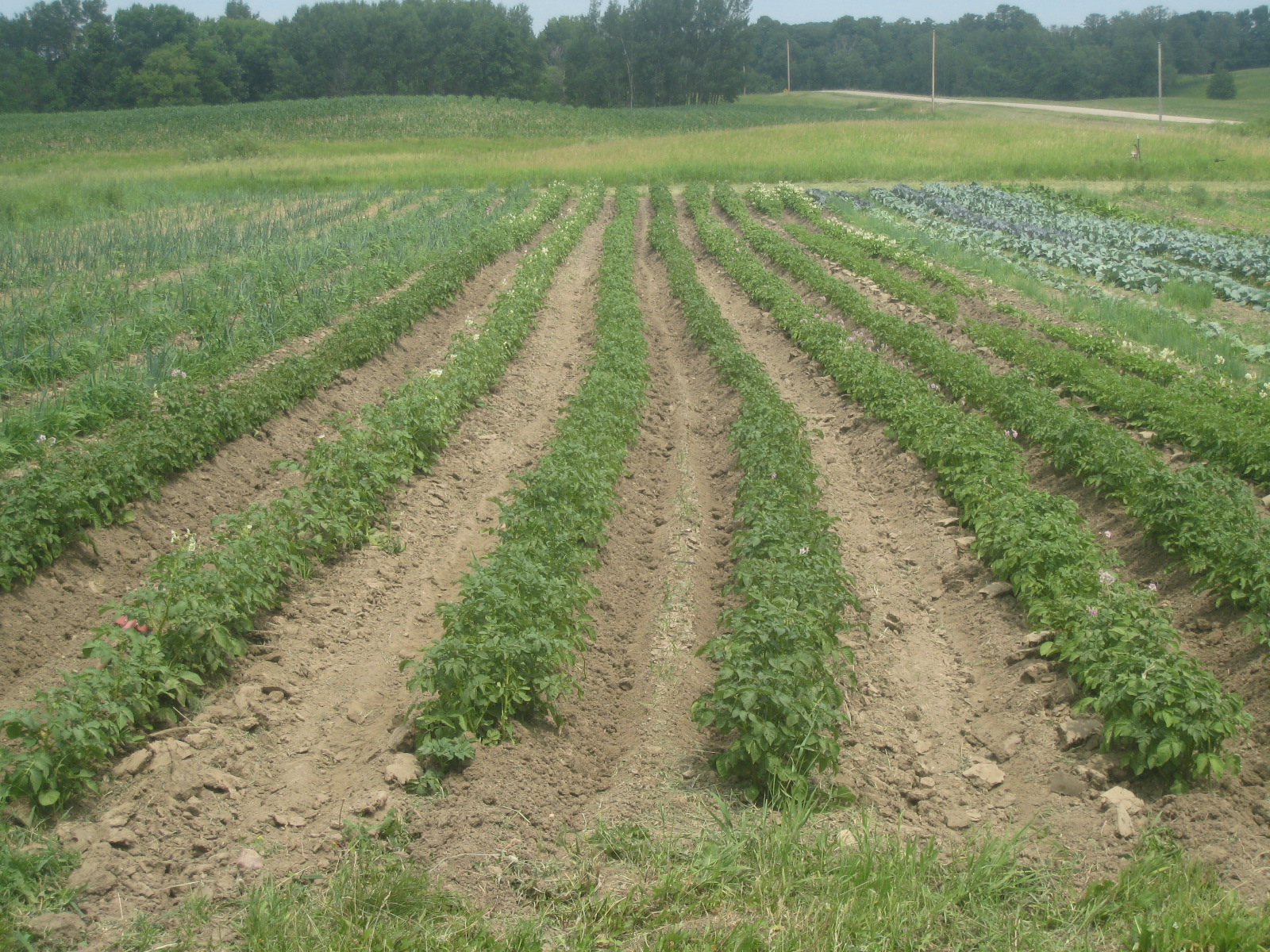
Still, the battle against weeds isn’t constant drudgery; there are little things to celebrate along the way. One such milestone each year is the hilling of potatoes. Typically this is done in June before the plants think about flowering, but, this year being what it was, I only got the job done yesterday; the field was too wet and the plants were too small all June. For organic potatoes, we cultivate the crop twice by tractor and hoe so that the field is pretty clean of weeds before hilling. Since a lot of farming is a real mind game, it’s that image that matters most and why I just love hilling potatoes. When done, it just doesn’t feel like a little victory, but it’s a real beautiful sight. Cilantro
We have been eating a lot of spinach the past few weeks, both raw and cooked. Here is a recipe I found online that uses ground lamb and spinach in stew form. All three kids ate everything in their bowls! No lamb? I’m sure beef would work just fine too:
http://happyvalleylocavore.blogspot.com/2012/01/turkish-style-lamb-stew-with-tomatoes.html
Crazy Weather and Vegetable Production
Well, this is week one of the CSA season. I’m excited to get going and start pulling some harvest out of the fields we’ve been tending. Or trying to tend is a little more like it this year. I think our volatile weather has everybody a bit worked up but I thought I would explain just how this extended cool wet spring weather and frequent storms have effected our vegetable operation in particular.
Our first major issue is planting. Although we plant all seeds with a hand-pushed Earthway Seeder, we put most of our crops in the ground with a Holland Transplanter which is pulled behind a tractor – me driving and Maree on the transplanter feeding the plants into the machine which are placed in the ground. With saturated soils like we’ve had, there have been very few opportunities to till the ground (with a big heavy tractor) and afterwards plant (with a big heavy tractor). We still have 6 flats of tomatoes and a couple flats of squash just sitting by the greenhouse ready to be planted – nobody knows when. Pushing our luck a bit when we planted in pretty wet soils a couple weeks ago, we left some seriously deep ruts out in the field. These ruts retain water like little ponds, making it impossible to cultivate and will probably leave this part of the field compacted for a couple years to come.
Which brings us to the second major issue – weeds! We cultivate our crops with a tractor where we pull an implement which cuts off weeds below the soil and disturbs germinating weed seeds to keep them from setting root. Normally we would have cultivated crops 3 times by the Forth of July, whereas this year we’ve cultivated once. Not only that, but anytime I starting looking at a hoe to go kills some weeds, the sky opens up and dumps a few more inches of rain. Regardless to say, sitting on the sidelines just watching weeds take over a field without even a chance to get into the fight is pretty frustrating. On a normal year I get physically exhausted this time of year combating weeds by hoe and by hand, but I would much rather be tired than have what I’m calling “weeding anxiety” like I have. Lying in bed at night, I keep running through my list of things to do but no ability to get them done.
The last major issue with this season is more related to the cold temperatures than the rain and that’s slow growth. Even if planted on time with low weed pressure, many plants are just sitting there doing nothing. I have eggplant and pepper plants that are maybe an inch taller than when I planted them 3-4 weeks ago. Heat-loving plants have an especially hard time, although everything could have done with warmer soil temps a month ago. Take a potato, for instance. When we planted them in mid-May we might as well have put them into a refrigerator and expected them to sprout; the soil was just so cold, plants emerged after 2-3 weeks, whereas, last year ,they just shot out of the ground in a week.
Any which way, the CSA season is starting and we’re in it for the duration. I’m hoping after this slow start things will start to turn around and we’ll kind of get back to normal. Something is bound to grow well.
In the box:
- Salad Mix
- Green Onions
- ‘Red Sails’ Lettuce
- ‘Cherry Belle’ Radishes
- Bok Choy
- ‘Emu’ Spinach – you can really see the hail we got last week on these big leaves, but, I assure you, they will taste the same 🙂
Ingredients
- 1/2 cup butter
- 2 tablespoons sugar
- 1/2 cup sesame seeds
- 2 (3 ounce) packages ramen noodles ( uncooked, broken up, & do not use seasoning packs)
- 1 (3 ounce) packages sliced almonds
- 1 (2 lb) bok choy
- 4 stalks green onions with tops
- 3/4 cup vegetable oil
- 1/4 cup red wine vinegar
- 1/2 cup sugar
- 2 tablespoons soy sauce
Directions
- In large pan melt butter and add sesame seeds, sugar, broken ramen noodles, almonds.
- Brown and set aside to cool. After cooled, break up and set aside in small bowl.
- Wash and chop bok choy (smaller is better) and green onions in large salad bowl.
- Dressing
- Mix vegetable oil, red wine vinegar, sugar, and soy sauce.
- Just prior to serving the salad, (plan for this salad to be the last thing you pull together for the event), mix bok choy and ramen noodles mixture. Drizzle dressing over salad or pass dressing around in small bowl.