Lida Farm Tour

A few CSA members took me up on my invite to join a little farm tour last week – thanks for coming. The tour was hosted with an organization called FARRMS, a sustainable agriculture organization in North Dakota. Part of their work is to support beginning and existing sustainable agriculture operators build their business and get going.

I’ve hosted a number of tours at my place in the past and certainly participated in farm tours on other farms. There’s no better way to learn the details of a farm operation than seeing it first hand and asking questions and getting answers directly from the farmer. \

I’d say farm tours are more common among the organic community than the conventional farm communtiy, in part because there’s greater experimentation in growing crops and tricks to deal with things like weeds and pests than on a conventional operation.  I also appreciate that the organic farming community is willing to share and support one another instead being competitive and throwing rocks at each other.

The Half-Finished High Tunnel

I don’t know what tour participants had as a big takeawy from this week…maybe ‘Ryan never finishes a project’ or ‘How do so many weeds grow in one location?’ Whatever the takeaway, getting together and looking at crops should be a Midwestern tradition that never dies.

In the box:

  • Sweet corn: Sorry Tuesday people, it just wasn’t ready earlier in the week…a few days makes a difference. This is an early corn variety, so ears are always small.  You should see the stalks…they stand about 3 feet tall. 
  • Norland Red Potatoes
  • Cucumbers
  • Bunch of Beets
  • Green ‘Stonehead’ Cabbage
  • Green Onions 
  • Red Torpedo Onion: Use as you would any red onion, either fresh or in cooking.
  • ‘Provider’ Green Beans
  • Fresh Thyme: Small bunch in box.

New Equipment for a Small Farm

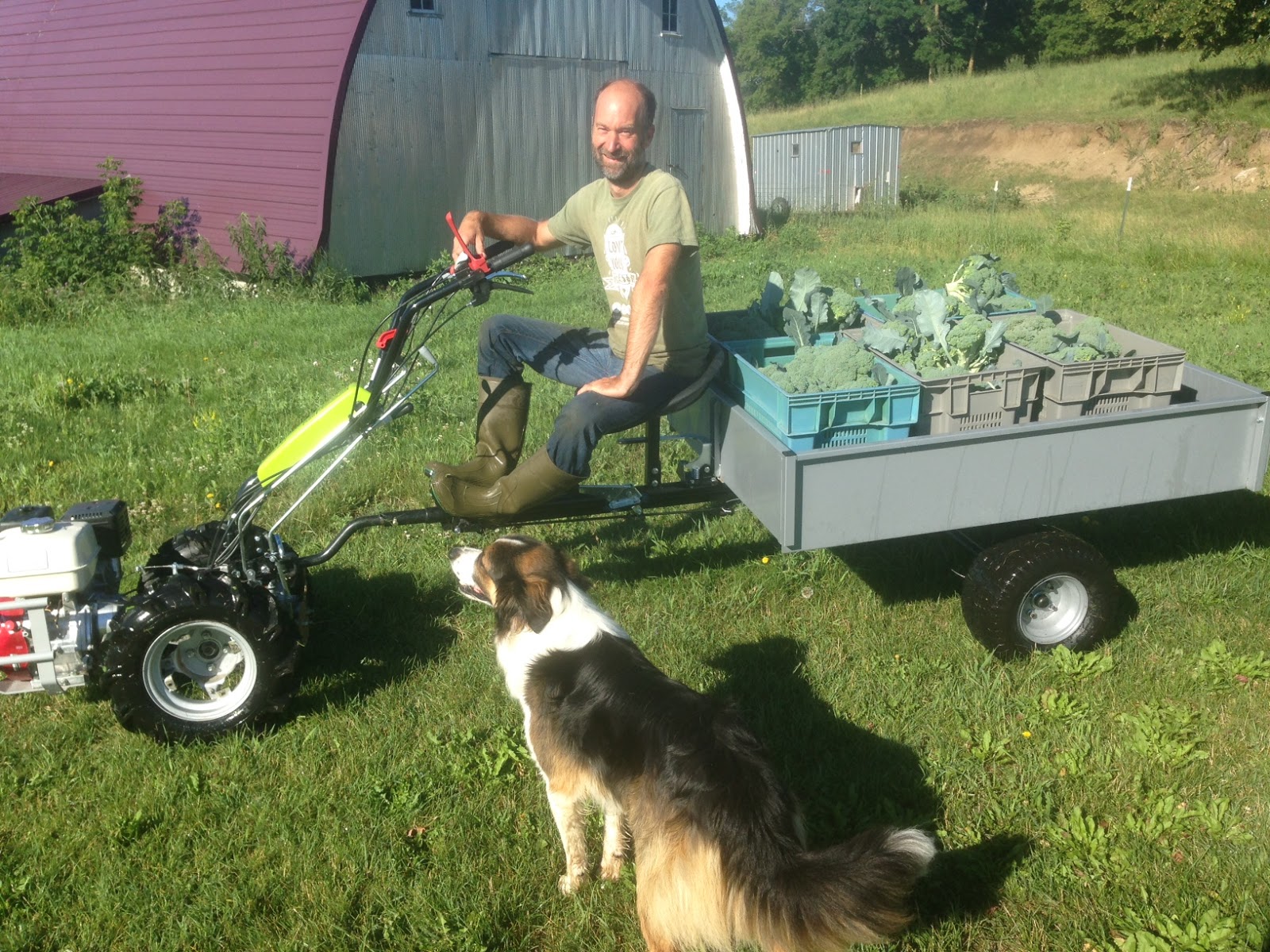
There was a point last year when pushing a two-wheeled Vermont handcart up the hill near our house for the 1,000th time when I decided that I’d had enough. Since I started farming on my own in 2001 down in Lake Elmo, I transported my harvest bins around by hand. At that time I started I was 25; today I’m 40. I knew farming had already aged my body and continuing with this low-tech form of transportation was only going to age me quicker. 

So, this spring I fell in love in with an Italian tiller from Grillo. Sometimes called walking tractors, these glorified tillers are used extensively in Europe where farms the size of mine are much more common.  Yes, they have rototillers like any old Troy-Built, but they are designed to fit a huge range of implements from mowers to cultivators to potato diggers. Considering my need for a nimble form of transport and a tiller to fit into the little spaces on the farm where the tractor doesn’t work, I coughed up the $5k to bring this beauty on farm together with a cart. 
It seems a bit funny sometimes driving around the farm on a seat behind a tiller, but with the special ‘drive gear’ it makes for a pretty nice ride and I’m confident will save me from early knee and back surgery. 
In the box: 
  • Fresh Basil 
  • Fresh Fennel: Big bulb with celery-like stalks 
  • Broccoli
  • Arugula: Oakleaf-shaped green banded with a red band
  • Dino Kale
  • Green or Fresh Garlic: Cloves inside just like cured garlic…you could let dry down until papery in a sunny, dry location 
  • Hakurai Salad Turnips: I just love these things…they are a very mild turnip that is made to  eat raw.
  • Summer Squash: Both a zucchini and a yellow straighneck or yellow zucchini, which you use the same as green zucchini. 
Fennel Parmesan Recipe (adapted from Food Network)
1 fennel bulb, cut horizontally into 1/3-inch slices
Olive Oil
2 T Parmesan Cheese
Lightly oil the bottom of a 8 by 8-inch glass baking dish. Arrange the fennel in the dish. Sprinkle with salt and pepper, then with the Parmesan. Drizzle with the oil. Bake until the fennel is fork-tender and the top is golden brown, about 45 minutes. Chop enough fennel fronds to equal 2 teaspoons, then sprinkle over the roasted fennel and serve.

Extreme Weather and Vegetables

A giant wind blew across our bed at 5 am and a wind tunnel enveloped the upper story of our house for the next half hour. I initially thought it was just a front which would quickly pass over and I could go back to bed, but as the intensity increased, I knew I’d have to move and move quickly. Any passerby at the time could have caught the sight of me streaking across our yard at a breakneck speed to drop the roll-up sides of the greenhouse. You see, a hard and sustained wind like that would turn that open greenhouse into a 100-foot airplane wing, which, if I were lazy and stayed in my room, I could have watched take off into the neighbor’s field like Mary Poppins leaving a party.
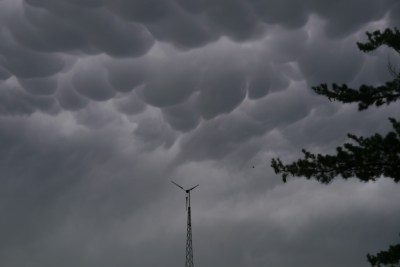
In my line of work, I always hear about weather, and one of the common stories I’ve heard this week and I’ve told myself is how the weather has changed.  I’m 40 years old and I distinctly remember hail being a very rare occasion – maybe once every 2-3 years. Neighbors with more life under their belt than me always talk about a time when rain came slowly. A gentle rain would give the earth its 1 to 2 inches of precip over 8 – 24 hours. Instead, each time we receive and inch of rain as of late, it drops out of the sky in 40 mintues or comes with a 40-mph wind. This was the case the evening of the 4th of July. Violent winds coupled with hail and a downpour of rain – the level of downpour I imagine one would find in the rainforest. 
This change in the weather has a signficant impact on agriculture. Although this effects all forms of ag, I think it has an acute impact on commercial vegetable production.  Certaily my friends growing corn and soybeans have issues with extreme weather and it can certainly affect their yield, but, at the end of the season, these tough crops almost always produce something to fill the contract. I’ve seen field corn laid flat on the ground in July which produced a decent crop by October. Hailed-on lettuce or ripped greens, on the other hand, don’t pass muster with a customers and just don’t get sold. Vegetable crops are delicate and fickle. In the big picture, they were bred to grow under very specific conditions and as our climate changes, I have to wonder what the future will look like in the long run. 
In the box: 
  • ‘Farao’ Green Cabbage: See recipe below  
  • ‘Imperial’ Broccoli
  • Flat-leaf Parsley
  • Spinach: You’ll see evidence of the hail 
  • Romaine Lettuce: Not the prettiest lettuce I’ve grown…looking good until the big storm this week. 
  • Bunch of Beets
  • Green or Fresh Garlic: Garlic with the stalk still on. You can use right now (it’s a bit more pungent when fresh), or simply leave out in a dry, sunny location to cure it over the next 10 days for longer storage. 
  • Zucchini
Dave’s Mom’s Best Slaw

6.5 cups of coursely chopped cabbage, loosely packed
1 carrot, peeled and cut into chunks (about 1 cup)
1/2 cup prepared mayo
1/4 cup sugar 
2.5 tablespoons cider vinegar
1/4 teaspoon salt
1/4 cup evaporated milk 
1/2 cup minced fresh parsley
2 tablespoons chopped fresh chives or scallions (optional)
Working in batches, fill a blender to the top with chopped cabbage and add cool water until 3/4 full. Whirl on low speed for about 4 seconds, just until the cabbage is evenly chopped – but not too fine – and transfer to a colander. Repeat with the rest of the cabbage. 
Place the carrot chunks in the blender and cover them with cool water. Whirl for about 8 seconds. Drain the carrots very well. In a small bowl, whisk together the mayo, sugar, vinegar, salt, and evaporated milk and set aside. 
In a serving bowl, mix together the well-drained cabbage, carrots, and parsley. Toss with the dressing and add more sugar, vinegar, and/or salt to taste. If you like, serve with chives or scallions. Tightly covered and refrigerated, this slaw will keep for a week. 

Preparations for Autumn

Hey, we’ve come to the end of another summer CSA season and I’m tired.  Mar and I are motoring over to Duluth on Sunday after the farmers market on Satuday and we’re taking the kids to the Black Hills next week for vacation.  We’re been harvesting, washing, and packing produce 6 of every 7 days for the last four months….it will be nice to take a break.

When we return there’s still preparations before freeze up.  We’ll need to take out tomato trellis, disk the fields, and plant our rye cover crop.  Wood needs to be stacked, a cabins needs winterizing, and I have a plan to build a sauna this fall.  We still even planting late season greens since we’re going into our third year of the winter CSA.

So, as you look to preparing for the cold weather yourself, let me get a couple things on your radar:

  1. Buy Some Meat: Our members, the Nordgrens, farm west of Pelican and have beef and pork available for sale this fall.  Contact them at 218-340-2423 or hnord00@gmail.com if interested.
  2. Fall CSA Share: We’re planning on delivering “Halloween” and “Thanksgiving” boxes of good fall crops and some greens.  I’ll be sending out an email to give you a chance to sign up.  
Thank you, CSA members, for joining us for the ride this year and thank all others who read this blog.  I hope my words give you some insights into our farm life, provide a few things to ponder, and maybe provide a little humor.  -Ryan.  

In the box:

  • Celariac: Yes, this is a crazy looking vegetable, I know.  It’s the ugly bulb on the end of a skinny celery stalk.  You use the bulb in cooking anywhere you’d use celery.  
  • Autumn Greens: These greens in the bag are young and mild, so you could use as you would salad mix/lettuce or use to finish off a dish where you’d cook down some greens. 
  • Chiogga Beets 
  • Sunshine Kaboca Squash 
  • Acorn or Carnival Buttercup Squash
  • Red Onion
  • Parsley
  • Parsnips: The white carrot-looking things
  • Pie Pumpkins 
  • Cabbage: Not the prettiest cabbage I’ve grown…

Party Preparations

Maree was greeted yesterday by a pig being butchered in her front yard.  She took it pretty well. 

Here at the farm we’ve been doing our best to get ready for the harvest party.  This is the one time each year when we invite a bunch of people over to celebrate the season.  We’ve been mowing (this only happens about 4 times a year), weedwhipping, and generally putting things away so it looks a little less chaotic.  Hopefully when you come, you will still see the real Lida Farm behind all this order 🙂 

Harvest Party in the Barn, 2014 or 2013
We do have a little rain in the forecast – still only 30% chance this evening – but please come prepared just in case.  We’ll go on a little walking tour at 5 pm so we’ll trounce through some wet grass at the very least.  Just in case of bad weather, we are setting up the barn for dining.  Ideally, we’ll be outside, but, should we need to go inside, it does make for an authentic barn event experience.  Lots of hay bales and bad lighting…
Please note that this weekend at Maplewood State Park is Leaf Days, a great opportunity to check out leaves in their autumnal glory.  If you’re making the trek to the party, you could make a day of it.  
In the Box;: 
Salad Mix
Parsnips: Those loose white things which look like carrots. 
Carrots 
Butternut Squash: The tan one
Sunshine Kabocha Squash: The red one
Russet Potatoes
Dill
Cucumber
Garlic 
Leeks